The Writings of Buchi Emecheta: A Comparative Study – by Dr. Rose Ure Mezu
Introduction:
Buchi Emecheta: a Biographical Sketch
![]()
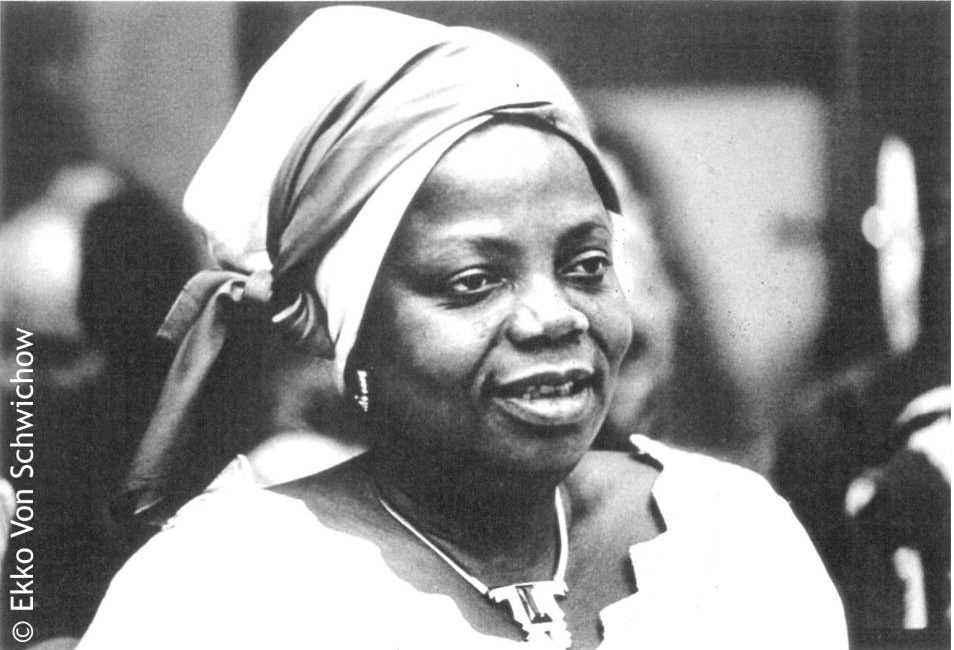
Buchi Emecheta occupies an unassailable position as the most prolific and important African woman novelist living, or dead. Florence Onyebuchi (Buchi) Emecheta was born on August 14, 1944 in Lagos. The daughter of a railway worker Jeremy Nwabudike Emecheta and Alice Okwuekwuhe Ogbanje Ojebeta of Ibusa, Nigeria. Buchi immortalized the story of her mother – “Blakie’s” – actual enslavement and cultural re-enslavement in The Slave Girl. Buchi Emecheta’s parents who desired a boy were disappointed at the birth of a premature baby girl who was not expected to live. But Buchi, the frail baby, clung stubbornly to life. Even as a growing child, Buchi’s spirit of rebellion would challenge the prevailing gender discrimination within the Nigerian society, forcing her parents to send her to school rather than educate only her younger brother because he was a boy. Buchi eventually attended Girls’ High School on a scholarship and vowed to go to England. Her father died when she was nine, and her mother went back to Ibusa, while Buchi and her brother lived on in Lagos. A year later, she received a full scholarship to the Methodist Girls School, where she remained until the age of sixteen when she married Sylvester Onwordi.
Seeking to escape the pressure of relatives to marry rich older men for a fat dowry, Buchi at sixteen, married Sylvester Onwordi to whom she had been engaged since age eleven – “a dreamy, handsome, local boy, who though older than myself, thought he would make it big in United Kingdom. But I soon found out that under his handsome and strong physique was a dangerously weak mind” (Head Above Water – HAW – 27). Buchi’s willful marriage caused a rift with her mother, “Blakie.” That the rift was never patched up before her mother’s death, coupled with the fact that the marriage did not last, created a big burden of guilt which Buchi carried for most of her life until a visit to her mother’s grave in Ibusa eighteen years later washed away her guilt and gave her some understanding of her mother’s personality. In the same way, a similar visit by Alice Walker to the grave of her father with whom she did not get along would give Walker similar relief. Buchi’s job with the American Embassy in Lagos paid her sufficiently to enable her fund her husband’s trip to England. Then, in 1962, at the age of eighteen, Buchi finally traveled with her two children to rejoin her husband. On a cold, grey, March morning, Emecheta finally arrived by ship to Liverpool. Her first sight of England filled her with enough gloom to warrant her statement
If I had been Jesus, I would have passed England by and not dropped a single blessing.’ It felt like walking into the inside of a grave. I could see nothing but masses of grey, filth, and more grey, [but] it was too late now. I had sold all I had to get this far. . . I must make it here or perish. And I was not going to allow myself to perish because if I did, who was going to look after the babies I’d brought this far?” (Head Above Water 29).
Such a spirited resolution enabled Buchi to survive the incredible hardships which she recorded in her early autobiographical books, Second Class Citizen, In the Ditch. Her husband Sylvester Nduka Onwordi was sexist, indolent, improvident, unfaithful and physically abusive. Eventually, she divorced him when he burnt the manuscript of her first story, “The Slave Girl.” This ‘murder‘ of her brainchild precipitated the formal separation because Sylvester would deny both paternity of the children and even the legal marriage to Buchi. Amidst the difficulties of raising five children by herself, she began studying for a degree in Sociology, resolving to beat the odds and survive as “a student, mother, writer and a person” (Head Above Water 103). Sounding like the fictitious protagonist of her novel The Joys of Motherhood, Buchi explains her love for her children: “I was not happy with him [Sylvester]. I was not really happy until I was expecting my fifth child.” < http://www.kuumba-survivors.com/buchiemechetaobe.htm> Emecheta insists: “Still, one has to be grateful to him in a way for without him [Sylvester] I would not have had them [children].” Consequently, Buchi dedicated Second Class Citizen to her “five children . . . without whose sweet background noises this book would not have been written.” This dedication has raised a lot of skeptical eyebrows among her readers and critics alike. But Buchi attributes her sentiments to her gratitude for having a thriving, unified family, her own space and a home of her own: “. . . when I was that age, I did not have a place of my own . . . I lived with relatives, but these were relatives who had children of their own;” (65) “now, I could feed my children, feed myself and take care of myself. I started buying a house. If I had stayed with him [Sylverster], I would not have bought a house. I didn’t know I was famous. I was just freeing myself from the burden of my marriage.” < http://www.kuumba-survivors.com/buchiemechetaobe.htm.>
Consequently, in a little piece contained in the essay collection, In Search of Our Mothers’ Gardens, novelist Alice Walker would give Buchi the highest accolade as “a writer because of, not in spite of, her children.” Walker, for one, concludes that “Emecheta is a writer and a mother, and it is because she is both that she writes at all” (66). Emecheta’s attempts to write resulted in the publication of In the Ditch which, along with her second novel, revealed the deplorable depth of the British welfare system, criticized racism and social oppression of women by both society and by men – her husband. Thus, Buchi’s tireless determination helped her to get out of the London ghetto housing and build a better future for her children by giving them qualitative educational opportunities. In 1973, she got her degree in Sociology; then she registered for a Masters degree and published her second novel, Second Class Citizen, a book she regards as therapeutic both in the actual writing and by talking about it.
While rewriting The Bride Price, Buchi Emecheta was also teaching as a supply teacher to Public schools – a job that gave her invaluable lived experience and insights into the plight of poor, troubled English youth and the limiting educational facilities that forced teachers to play up to young people who could go through school for five years and still not learn anything. She states, “Out of about a hundred or so boys who entered the school [Quintin Kynaston] that year, very few passed enough GCE subjects to qualify them to go further [whereas] at St. Marylebone Grammar School, the average boy achieved between nine and eleven “O” levels at a sitting” (Head Above Water 180-3). Concluding that the uneducated man with no choices is like a time bomb ticking away which could explode in the streets, she wrote, “Time Bomb” for The Times Literary Supplement” – an essay which she sees as a foreshadowing of the violent riots years later at Brixton and Toxteth. Sociology as a discipline had sensitized her to grave social concerns. She was particularly concerned that poor, black boys had no pride of race:
I remember the black boys born here in England were fond of making Tarzan sounds whenever they saw me coming. They laughed at the Africanness in me because they thoght that the West Indies was better than Africa and they have nothing to do with the latter. Much later, I was able to support the group founded to encourage black children to understand like the Jewish child, by being taught the history of their people.” — (Head Above Water 181)
Akunna, the heroine of The Bride Price, had an upbringing identical to Emecheta’s and she defied tradition to become modernist enough to choose her own husband. Akunna was like the writer in more ways than one. Buchi confesses, “Akunna died the death I ought to have died. In real life, due to malnutrition and anaemia, I had a very bad time with my first daughter, Chiedu. I was in labour [sic] for days, and became so exhausted that when she was actually born I knew I was actually losing consciousness. . . I could not hold the baby because I was too weak . . . I had lost so much blood. In The Bride Price, Akunna did not recover. She died because she had gone against tradition” (165-6). It is no wonder that critics often blame Emecheta for her harsh treatment of her fictional heroines.
Emecheta’s next novel, The Slave Girl, was the result of her piqued hurt at a derogatory comment by her publisher George Braziller that Africa was no longer a fashionable subject for literature. The Slave Girl required research on the historical conditions of southern Nigeria between 1920 and 44; the story links these with events of the period happening in the rest of the world. Revising the different varieties of slavery, Emecheta concludes that her heroine, Ojebeta Ogbanje, her mother’s persona, suffered ideological slavery:
There are different kinds of enslavement . . but the greatest type of slavery is the kind most black African countries are going through at the moment: the enslavement of ideas. At the end of the book, Ojebeta Ogbanje was happy to be married in church, happy that her bride price had been paid, but we readers know it was her embracing Christianity, and the way Christianity had been preached to her, that was her greatest enslavement. (Head Above Water 204).
The Slave Girl won the Jock Campbell Award.
Her next book, The Joys of Motherhood was written in anger at the betrayal of her first daughter. It is the story of a self-sacrificing mother, Nnuego, who despite her endless devotion to her family was neglected by her eight living children and dies by the wayside unloved and only mourned by them for show after her death. Emecheta wrote the book in six weeks without pause at the end of which she fell sick with mental fatigue, “I knew that all my anger was there on paper, otherwise I would not have recovered as quickly as I did” (239). This story, dedicated to all mothers and which has been translated into several languages, remains Buchi Emecheta’s chef d’oeuvre and her best known work. Within this story, she worked out most of her angst and ambivalence about the institution of marriage and the cultural stigma attached to it when marriage fails:
I kept wondering how it was that only a few years back I had felt that to be a full human being, I had to be a mother, a wife, a worker and a wonder-woman. I now realized that what I was doing then was condemning myself to an earthly hell. Marriage is lovely when it works, but if it does not, should one condemn oneself?” (Head Above Water 243)
Buchi makes a tremendous statement on the role of adversity as a positive catalyst towards creativity:
If my marriage had worked, I probably would have finished my library course, tucked myself away in a public library and dreamed of becoming a writer one day. . . . That is why I can now forgive everybody. That is why I am not bitter anymore. The realization of all this came much later; when I was banging away on the old typewriter putting together “In the Ditch, I was not so philosophical. (HAW 65)
She wrote to literally save her self and her sanity. Obviously, with maturity has came a more tolerant and charitable attitude towards her female characters. Maturity also empowers Emecheta with the courage to reject Sylvester’s efforts at reconciliation, and she adds,
Although many of my Nigerian friends would do anything to make a good marriage – a marriage in which the man would take almost all the financial responsibilities… that type of marriage did not appeal to me. I would rather have a marriage in which we would be companions and friends, a marriage in which each member would perform his or her own role, and in which neither role, least of all the kitchen one, would be looked down upon.” (Head Above Water 103)
This companionate concept of marriage undergirds Emecheta’s attempt to have her alter ego in Double Yoke take on the recalcitrant macho lover Ete Kamba to delineate and affirm the qualities needed by the new Africa man.
Also, Buchi writes occasionally for television. A Kind of Marriage was prepared for the BBC as an episode of the Crown Court series “Juju Landlord” for Granada TV documentaries. Concerning writing for television, Buchi observes with reservation, “I know that I love people very much, but I could not work for a long time close to people on a project that demanded a high input of emotional energy. One writes in isolation, and the longer the isolation, the deeper the work. I cannot cope with the pressure and superficiality of television work” (205). This judgment in favor of isolation comes much later in her career since, as was earlier pointed out, Alice Walker’s accolade to Emecheta for Second Class Citizen: “A writer because of, not in spite of, her children” came as a result of Emecheta’s disciplined ability to write despite the distractions of her “five children . . . without whose sweet background noises this book would not have been written” as contained in the novel’s dedication. She had no choice but to do so then.
Since marriage is a most important issue in the life of any woman, especially for Africans, Emecheta has strong opinions about the success or failure of this hallowed social and religious institution. She also comments on the attitude of fellow women regarding a divorced woman. A Kind of Marriage, Kehinde became the vehicle for expressing these strong opinions:
Re. Mrs Olufunwa. I sensed that she was not very pleased with my getting the house at all. She was like most of my married women friends who felt that single women should not be able to afford such things; they should be the “preserve” of women who stuck to and survived in their marriages. It does not matter how dead or superficial such marriages are, many women feel that tangible buys like houses should be their reward for seeing it through. Females like me who, though not by choice, are left to raise children single-handed, should never contemplate buying a house. This was one of my reasons for shying away from married Nigerian women (Head Above Water 21).
No doubt, with the passing of Flora Nwapa, Africa’s first female novelist, Buchi Emecheta now occupies the position as the female doyen of African literature – indeed, the female Achebe. As has been mentioned earlier, Nwapa had been the model for inspiration for Buchi attempting to write in the first place.
Buchi On Creativity:
On the creative process, the writer has this to say,
“How fickle public opinion is! The book you do not think much of, they come to like. Writers simply have to write and not worry so much about what people think, because public opinion is such a difficult horse to ride. . . . To read the proofs, I still do not like doing. As soon as the words have been squeezed out of my head, I really do not like being forced to read them again.” (HAW 204-5, 286). My work is a bit historical, social, and about women. Instead of writing books I don’t know anything about, I’d better stop.
About the themes of her novels, Emecheta ranks as pre-eminently universalist issues concerningwomen, explaining that her writings are stories of the world where women face the universal problems of poverty and oppression. Furthermore, she argues, the longer women stay around, no matter where they have come from originally, the more the problems become identical.
Certainly, Buchi Emecheta’s young adult rebellious spirit should be at rest because coming from a heavily male-centered society, she not only has “read and read” as her mother cursed her in frustration, she has written and written, and along with her earliest female mentor Flora Nwapa, has helped to break the glass ceiling to let in fellow women. Definitely, her books have changed forever the discourse about gender relations not just in Africa but globally. With her writings, and not just with children, Buchi Emecheta has finally achieved immortality.
by Dr. Rose Ure Mezu